
HOME
 The
female reproductive system is more complex than that of the male reproductive
system. In addition to producing female sex cells, known as ova (eggs), the
female body also protects and nurtures a developing baby for about nine months
while it grows within the woman’s uterus (womb). A woman’s breasts can provide
nourishment for newborns.
The
female reproductive system is more complex than that of the male reproductive
system. In addition to producing female sex cells, known as ova (eggs), the
female body also protects and nurtures a developing baby for about nine months
while it grows within the woman’s uterus (womb). A woman’s breasts can provide
nourishment for newborns.


FEMALE REPRODUCTIVE SYSTEM
 The
female reproductive system is more complex than that of the male reproductive
system. In addition to producing female sex cells, known as ova (eggs), the
female body also protects and nurtures a developing baby for about nine months
while it grows within the woman’s uterus (womb). A woman’s breasts can provide
nourishment for newborns.
The
female reproductive system is more complex than that of the male reproductive
system. In addition to producing female sex cells, known as ova (eggs), the
female body also protects and nurtures a developing baby for about nine months
while it grows within the woman’s uterus (womb). A woman’s breasts can provide
nourishment for newborns.
BREST

During
pregnancy, breast size increases as milk-producing glands known as lobules
develop in preparation for breast-feeding. Breast milk can provide all the
nourishment a newborn needs. As a newborn breast-feeds, the sucking action
stimulates the release of oxytocin, a hormone that promotes milk flow.
OVARIES

The
primary reproductive organs of a female are the ovaries, a pair of almond-
shaped glands. At puberty, ovaries produce about 400,000 eggs. Each month an
egg is released from the ovary and travels down one of the fallopian tubes. If
the egg is released around the time of sexual intercourse and it meets and
fuses with a male’s sperm, it becomes fertilized. If an egg is not fertilized,
it moves from the fallopian tube to the uterus and then passes out of the body
in the next menstrual cycle.
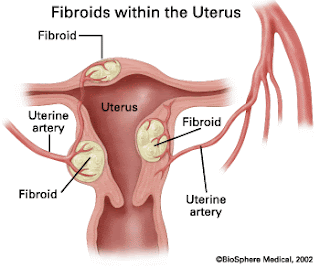
UTERUS

The
uterus is a hollow, muscular organ located on top of the bladder. During pregnancy,
a fertilized egg travels to the uterus, embeds within the uterine wall, and
forms a fetus . Around 40 weeks after fertilization, the fetus is born. During
birth, the baby leaves the uterus and travels through the mother’s vagina, a
tube that extends from the uterus to the outside of the body.


